Unlocking Sustainable Development Opportunities in the Green Belt
In December 2024, the revised National Planning Policy Framework (NPPF) introduced the concept of grey belt land, a transformative shift in UK planning policy. This new designation has opened the door to sustainable development within the Green Belt, offering a unique opportunity for housebuilders, developers, investors, landowners, and local authorities to address the housing crisis while preserving the best parts of the Green Belt. At Marrons, we’ve analysed the first year of grey belt implementation and compiled a comprehensive report that explores its impact.
What’s Inside the Report?
- A breakdown of the grey belt policy and its implications for planning and housing.
- How to identify grey belt land and build a robust case for development.
- Lessons from major residential planning appeals—what worked and what didn’t.
- Key considerations for our clients navigating the evolving planning landscape.
- Expert recommendations for leveraging grey belt opportunities.
Why Grey Belt Matters
- 80% of major residential grey belt appeals have been approved—signalling a major shift in planning outcomes.
- 1,600 new homes have been allowed on grey belt via planning appeals.
- The policy is helping to streamline planning processes, increase certainty, and support sustainable growth.
- Grey belt land is now central to tackling housing affordability and delivering infrastructure and open space through the Golden Rules.
Download the Full Report
Ready to explore how grey belt policy can unlock new development potential?
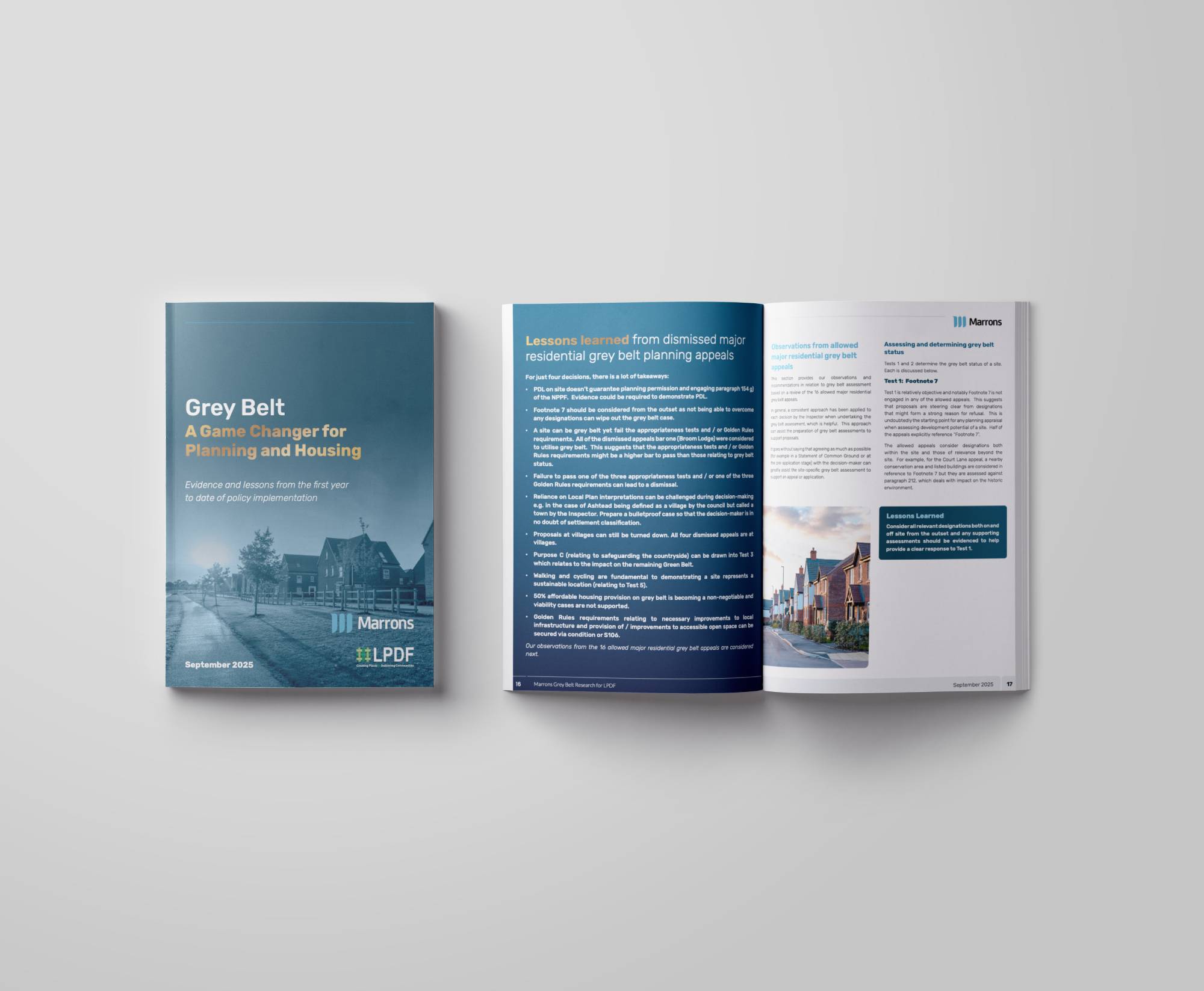
Complete the form below to access your free copy of Grey Belt: A Game Changer for Planning and Housing. Discover how this landmark policy is reshaping planning decisions and creating new pathways for sustainable development in the Green Belt.